
Kids' Outdoor Games: Fun and Health Benefits


Kids' Outdoor Games: Fun and Health Benefits 

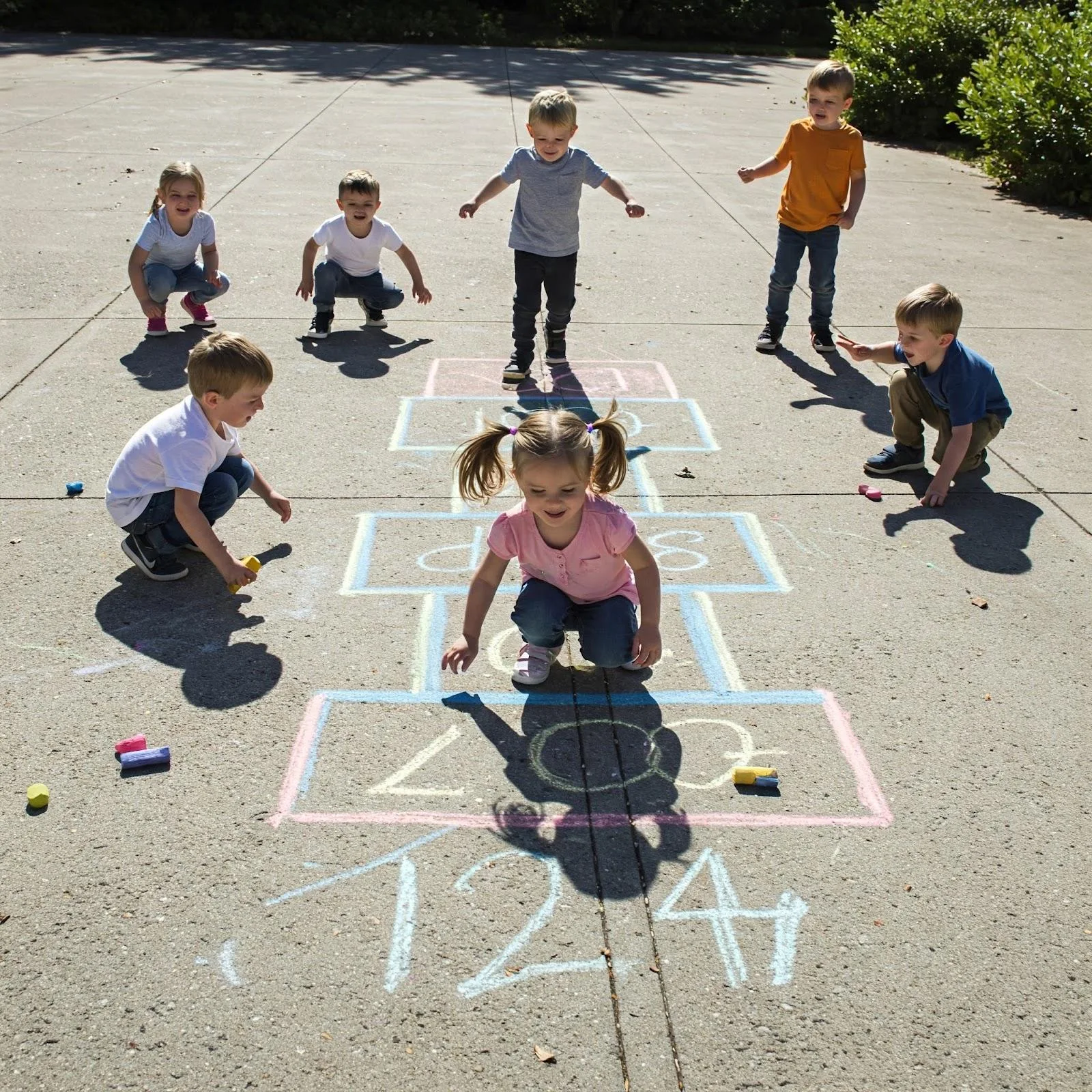
It is more crucial than ever to get kids outside and play in today's technology age. Kids' physical, cognitive, and social development all benefit greatly from playing outside. Outside play provides limitless possibilities for development and exploration, from traditional games like hide-and-seek and tag to more imaginative pursuits like scavenger hunts and obstacle courses.
The Significance of Outdoor Games:

Children benefit from playing outside:

  • Master complex motor skills and improve your coordination

  • Reduce excess fat while enhancing overall health.

  • Improve one's mental, emotional, and social acuity.

  • Encourage collaboration, resolve issues, and develop future leaders.

  • Take a break from stress by spending time in nature.

  • Traditional Outdoor Activities for Children

 Tag: Tag is a classic game that children of all ages love to run, jump, and giggle about. Many variants are available, such as water tag for hot days, flashlight tag, and frozen tag.

Scavenger Hunt: The ability to focus and think creatively is both honed by playing this game. The game of hide-and-seek allows children to practice strategy, discover new things about their surroundings, and take turns.

Rover Red: Kids stand in two lines, each trying to get through the other side's interlocked fists. Strength and cooperation are fostered in this game.

Hopscotch is a great chalk game for younger children to learn jumping, balancing, counting, and coordinating their movements on the sidewalk.

Fun, Collaborative, and Outdoor Activities


Game

Age Group

Key Benefits

How to Play

Capture the Flag

6+ years

Teamwork, strategy, and agility

Two teams try to capture each other’s flag.

Scavenger Hunt

All ages

Observation, problem-solving

Find items or solve clues around the yard/park.

Kickball

6+ years

Coordination, teamwork, and fitness

Like baseball, but with a large rubber ball.

Three-Legged Race

5+ years

Cooperation, balance

Pairs race with their legs tied together.

Human Knot

7+ years

Teamwork, communication

Untangle a circle without letting go of the hands.

Ultimate Frisbee

13+ years

Endurance, strategy, and social skills

Teams score by catching the frisbee in the end zone.


Benefits for Game Age Group, Main Guidelines for Playing Capture the Flag: agility, strategy, and collaboration for over six years. Rival teams engage in a flag capture contest.

Hunt for Clues: People of every age. Analysis, resolving issues. Look for things or figure out hints around the park or yard.

Sports: kickball, six years and up. Balance, collaboration, and health played similarly to baseball, but using a huge rubber ball.

Tricycle Race: Made for Ages 5 and Up. Harmony, collaboration, and Teams compete by racing with their legs bound together.

Knot for Humans: <7+ years Cooperation, dialogue, Find a way to untangle a circle while holding on to anything.

Playing Ultimate Frisbee for almost two decades, Stamina, planning, and people's abilities. Caught in the end zone, the frisbee is considered a touchdown for the team.

  • Wetness and Outdoor Recreation

  • Water gun tag is a great way to stay active and cool down on hot days. It's also great for groups.

  • For hours of slipping pleasure and mirth, set up a plastic slide and fill it with water.

  • Teamwork and physical conditioning come together in beach volleyball, making it a fantastic sport for older kids and teenagers. 

  • Wild Things and Pedagogical Exercises

Find as many leaves, rocks, and insects as you can in a nature scavenger hunt to get youngsters thinking and exploring. - 

To make math fun and engaging, try playing outdoor games like hopscotch or relay races while solving arithmetic problems.Advice for People Who Take Care of Children. Make sure the games are suitable for the kids' ages to keep them safe and engaged. To encourage imagination, combine guided activities with unstructured time. Keep a close eye on smaller children at all times, but especially near bodies of water or in crowded areas. Enhance social skills by promoting cooperative play and equal opportunity.In summary 

For kids, playing outside is essential to their growth and pleasure, not to mention a great way to kill time. Incorporating frequent outside play into your child's schedule,


Comments

Popular posts from this blog

School Hours in India: A Comprehensive Guide for Parents

India's school hours are very different based on the school, grade level, and type of organization. Parents need to know about these differences in order to plan their child's schooling and daily life. India's standard school hours Most schools are open in the morning. Indian schools usually start in the morning, between 8:00 AM and 9:00 AM, and end in the afternoon, between 2:00 PM and 4:00 PM. With this usual schedule, kids can go to paid classes or do things outside of school in the afternoon. Full-Day Schools Some schools, mostly private ones, stay open later than 8:30 AM, until 4:30 PM or even later, adding more classes, sports, and extracurricular activities to the school day. School Hours for Each Board The CBSE Schools A typical school day at a CBSE (Central Board of Secondary Education) school lasts between 6 and 7 hours. This is a normal CBSE school schedule: - Morning meeting: 8:30–8:45 AM - School hours: 8:45 AM to 2:00 PM - Breaks: 10 to 15 minutes between each...

Beautiful Teej Gifts and Sindhara Tradition for Kids

  Gifts for Teej Sindhara are a family ritual in India where children give gifts to one another during the holiday. Giving and receiving presents at the Teej festival makes kids' hearts glitter with delight and enthusiasm! These lovely traditions educate youngsters about love, giving, and spending time with family by giving and receiving meaningful gifts. Sindara or Sindhara Teej is a Hindu holiday that is mostly observed in North India around the time of Hariyali Teej. Which is the third day following the full moon in the month of Shravan (July-August). The Sanskrit word "sringar, " which means "decoration or beautification of women," is where the term "Sindhara" comes from. Meaning and Importance: - Sindhara Teej is related to Hariyali Teej, which honours the reunion of Goddess Parvati with Lord Shiva after she had to do penance for 108 lives to gain him as her spouse. It stands for love, commitment, and power in women. - On this day, married girls g...

Janmashtami School Celebration Ideas 2026: NEP-Aligned Guide for Kids

  In 2026, Krishna Janmashtami falls on Friday, 4 September 2026. You check the school diary, and there it is: a quick note asking you to prepare your child for the school celebrations. In the past, this just meant buying a scratchy synthetic dhoti , a plastic flute, and calling it a day. We would take a quick photo for the family WhatsApp group, and the kid would immediately go back to playing video games or doom-scrolling on a tablet. But boss, education and parenting in 2026 have fundamentally changed. If you are raising kids today, you know the daily struggle. They are completely obsessed with their screens, craving instant dopamine hits. However, under the National Education Policy (NEP) 2020 framework, Indian schools are aggressively moving away from boring rote memorization. The focus is now heavily on experiential learning—making kids touch, feel, and actively experience their culture rather than just reading about it from a dusty textbook. We want children to internalize t...

50+ Winning Rakhi Making Competition Ideas for School Students (2026)

When we were in school, a Rakhi making competition meant taking a ribbon, sticking a shiny plastic bead on it with a ton of glue, and calling it a day. If you were feeling extra creative, you threw some glitter on it. But it’s 2026 now, and the game has completely changed. Our kids are smarter, and the stakes are higher. Every single year, millions of decorative plastic Rakhis are discarded after the festival. These plastic Rakhis often contain synthetic threads, glitter, and foam, which are non-biodegradable materials that can remain in the environment for years. Think about it, yaar. We celebrate a festival of love and protection, but we end up harming the very planet that protects us. Many synthetic dyes and glues used in conventional Rakhis emit hazardous materials during production and disposal. Schools have caught on to this. Teachers don’t want to see plastic pearls anymore. They want sustainability. They want innovation. The growing awareness about sustainable celebrations mean...

Complete Guide to School Timing in India: State-wise Schedule and Best Practices

The times that schools in India start and end are very different from state to state and board to board. This means that there are a lot of different school schedules. Parents, teachers, and students who want to get around the Indian school system need to know these patterns. Most Indian schools are open for 6 to 8 hours a day, starting between 7:00 and 9:00 in the morning. The Central Board of Secondary Education (CBSE) gives general guidelines, but each state can set its own times based on what works best for its people and culture. In the north, states like Rajasthan and Punjab change their schedules with the seasons. During the summer months (April to June), schools often open from 7:00 AM to 12:30 PM to avoid the heat. Because the sun rises later and the weather is colder in the winter, school hours usually change to 8:30 AM to 2:30 PM. Southern states have more stable times because they are in a tropical area. In Tamil Nadu, Karnataka, and Kerala, schools are open from 9:...
This website uses cookies to improve your experience.